Case study — Starship
Making robot delivery ordinary
I built Starship's delivery marketplace around groceries and meals, two everyday use cases that helped autonomous delivery move from novelty to routine.

Context & role
Owning the entire consumer experience
Starship Marketplace is an on-demand food and grocery delivery service powered by autonomous robots, launched February 2018. By the time of this work it ran in 15+ neighborhoods across the US and Europe, with 400,000+ deliveries and 65,000+ users.
I owned product and design for the entire consumer side from day one: insight gathering, roadmapping and prioritization, and the business rules and requirements behind end-to-end features spanning consumer, merchant, and content-management tools. I led Starship's product design — a team of in-house designers plus partner agencies — and kept teams working on the same feature aligned to one mission and timeline.
The strategic bet
Two verticals, not one generic "delivery"
Robotic delivery shouldn't be a special treat for early adopters — Starship wanted to be part of ordinary people's everyday life. That meant anchoring the marketplace in two frequent, everyday use cases, groceries and restaurant meals, rather than treating delivery as one generic product.
Product-market fit wasn't a top-down plan, it was found through iteration. Groceries won early traction in the UK, with demand outpacing supply. Different shopping behavior in the US pushed the team toward meals instead. Rather than picking one and abandoning the other, we kept capitalizing on both signals — deepening the vertical that was working in each market instead of forcing a single global playbook.
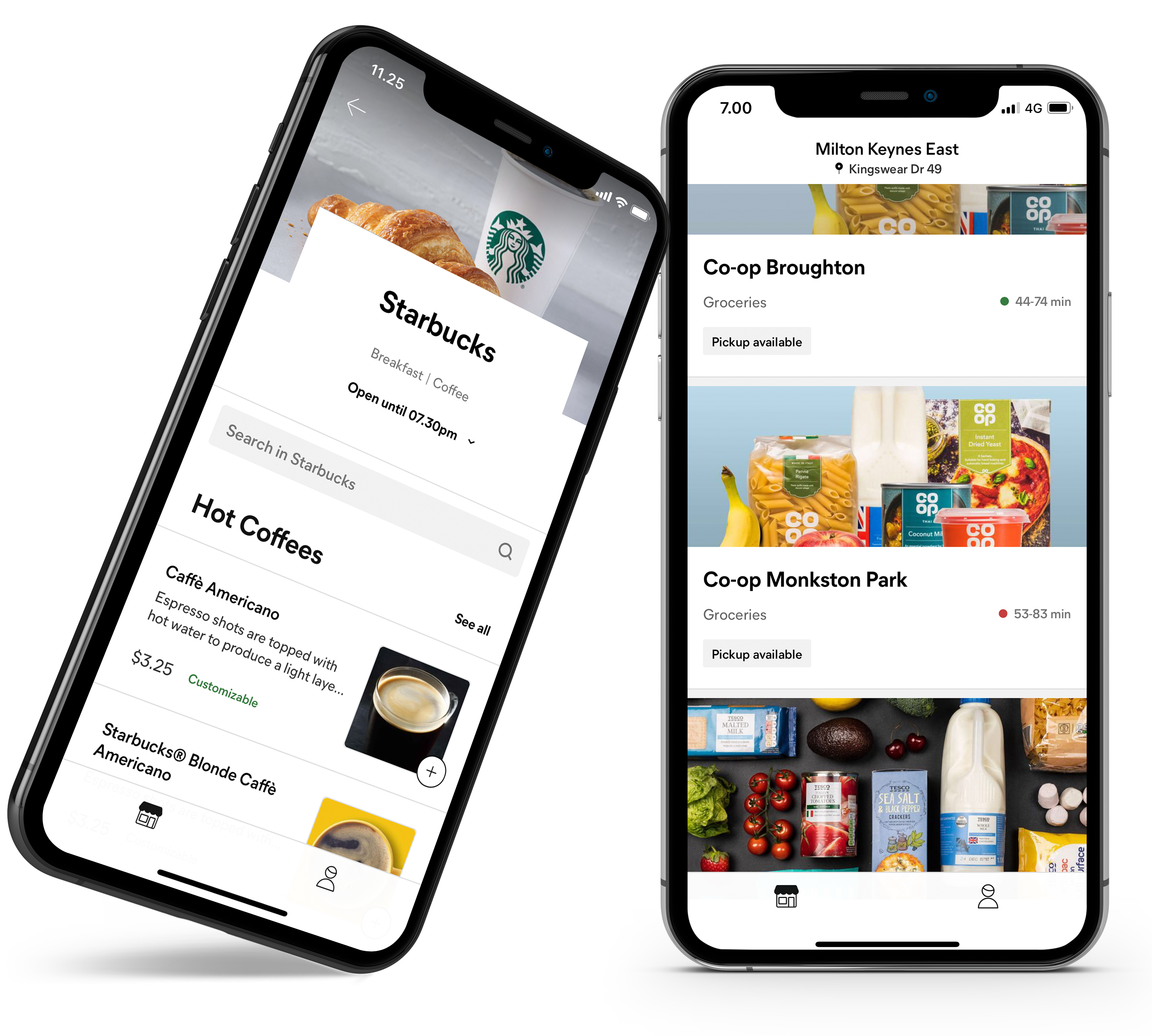
The same marketplace, two different everyday use cases — restaurant meals and groceries, each built for how that market actually shopped.
The human/robot meeting
The pickup moment was its own design problem
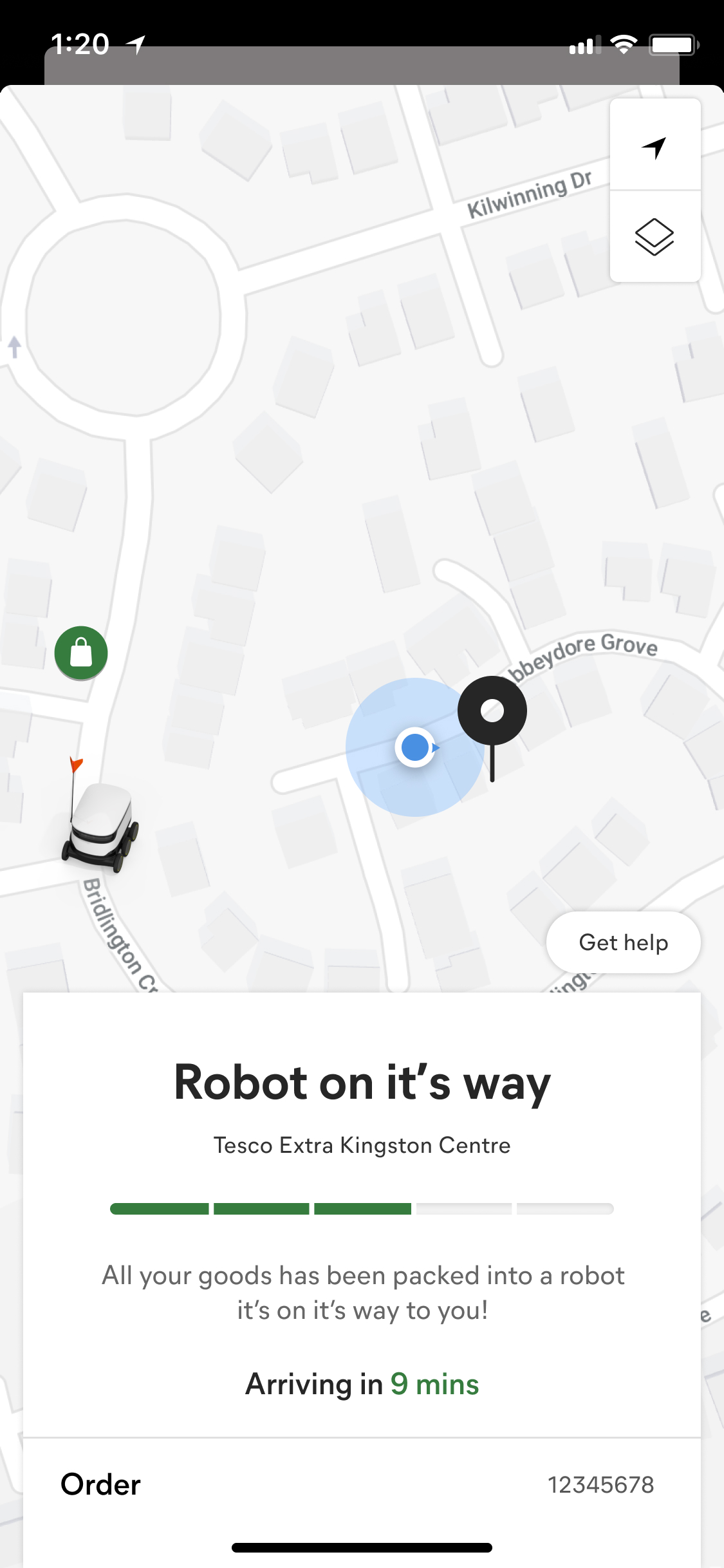
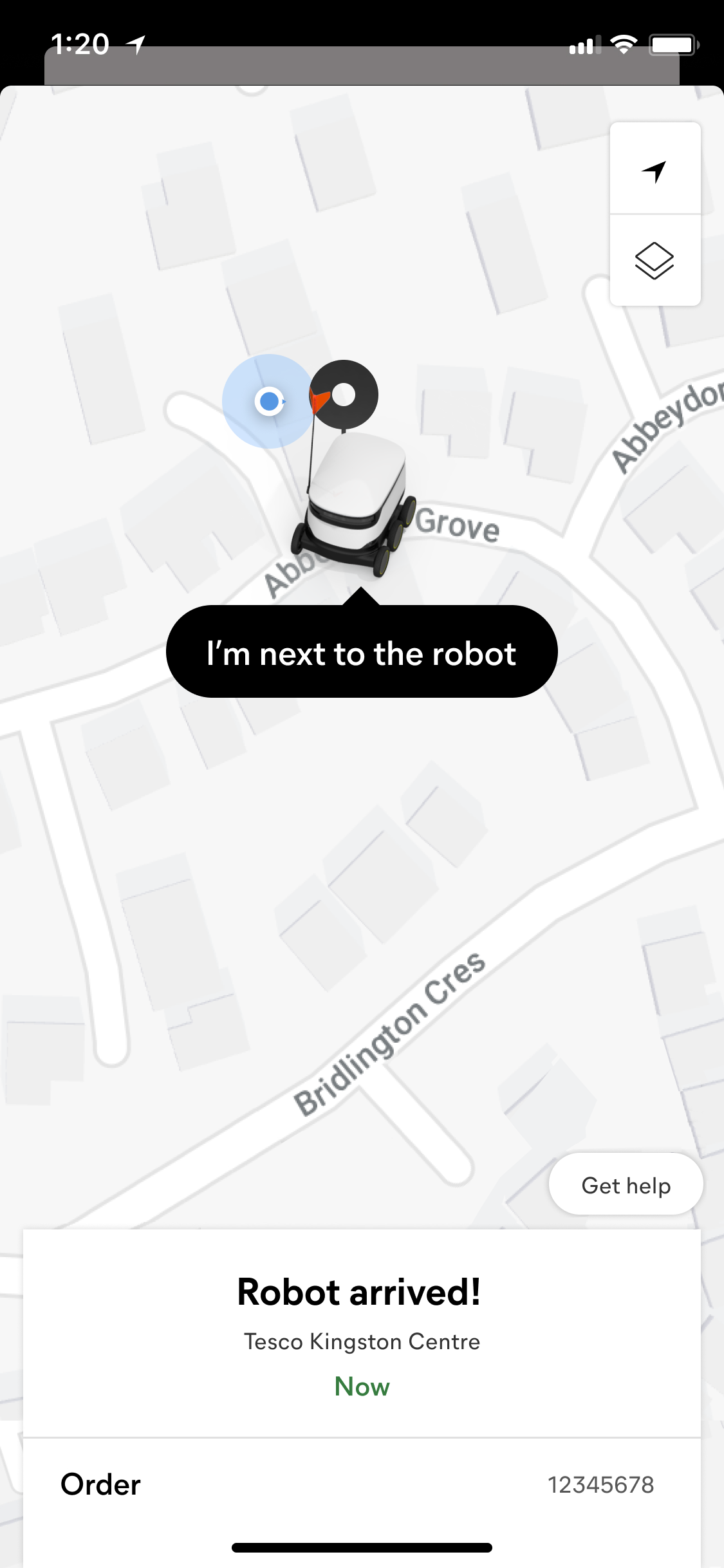
The mission was simple to say and hard to hit: make receiving the delivery as delightful as the technology warranted. It also had to work against a hard constraint — robotic bandwidth was limited and sold out every lunch and dinner peak, so the design had to keep robots moving back into circulation rather than waiting on a customer to notice.
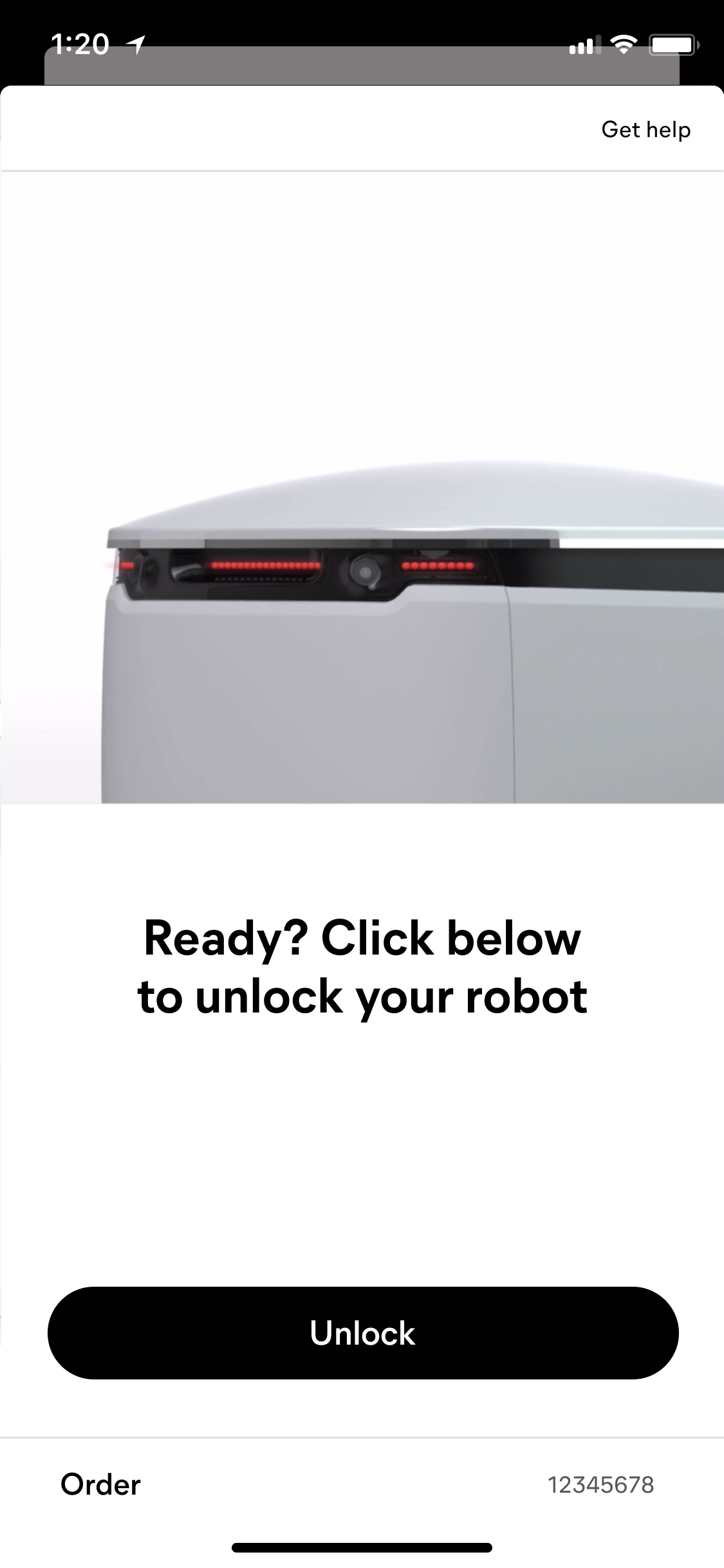
Getting a customer to the robot on time took real iteration: a gradual escalation of alerts, ending, as a last resort, in an AI-powered automated voice call. Opening the lid took more iteration still — cellular coverage had surprising dead spots, which meant building multiple fail-safe delivery flows so a delivery still completed when connectivity couldn't be counted on.
The hardest problem ran the other way. People tapped through the flow as fast as they could, but the robot needed a clear signal that the delivery had actually been received before it could leave. The fix wasn't less friction, it was more — the confirmation button only worked once it became a deliberate, warning-red tap.
Deep dive — Restaurants
Lots of options, well-known brands
Restaurant meals became the backbone of the US offering, and the hard problem underneath it was modifiers: size, milk type, extra shots on a drink; toppings on a burger. I defined the business rules for that system, led the design team building the UX, and coordinated development across consumer, merchant, and content-management teams. It scaled from 2 sites to more than 10 across the US and UK, carrying known brands including Starbucks, Pizza Hut Express, and Frankie & Benny's.
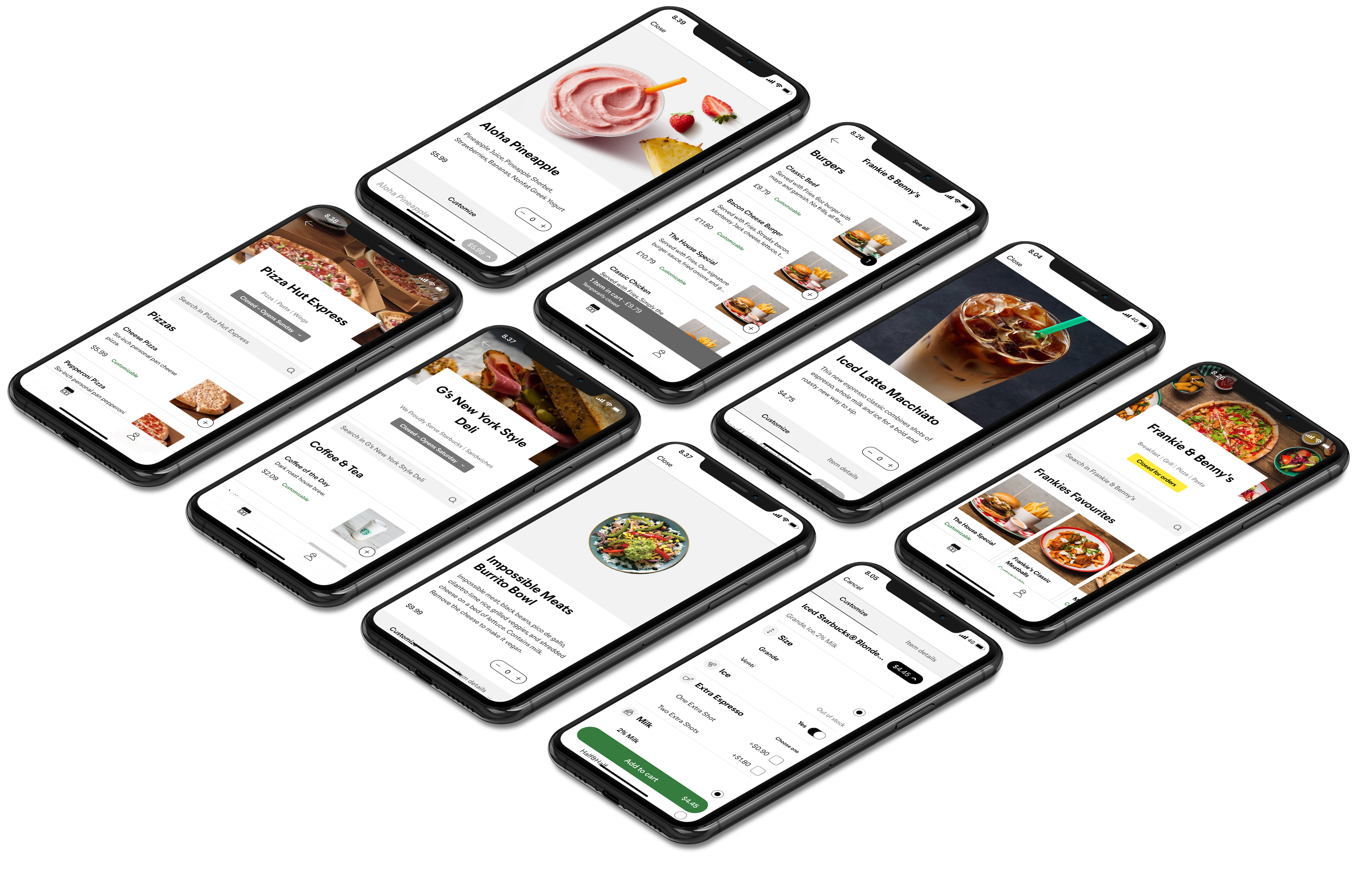
The modifier system, defined by me, was able to handle complex menu setups, beyond what similar systems at Wolt could. We built an elegant UI that hid the complexity of the system from the end user.
Deep dive — Groceries
Breadth, availability, and discoverability
Groceries started with a few hundred essential items roughly two years before this deck, and grew toward full supermarket-scale assortment. That growth turned the product problem into search and navigation: people needed to find both their regular basics and a long tail of less-common items without friction, which pushed search, navigation, and personalization into focus. Known merchant brands included Tesco and Co-op.
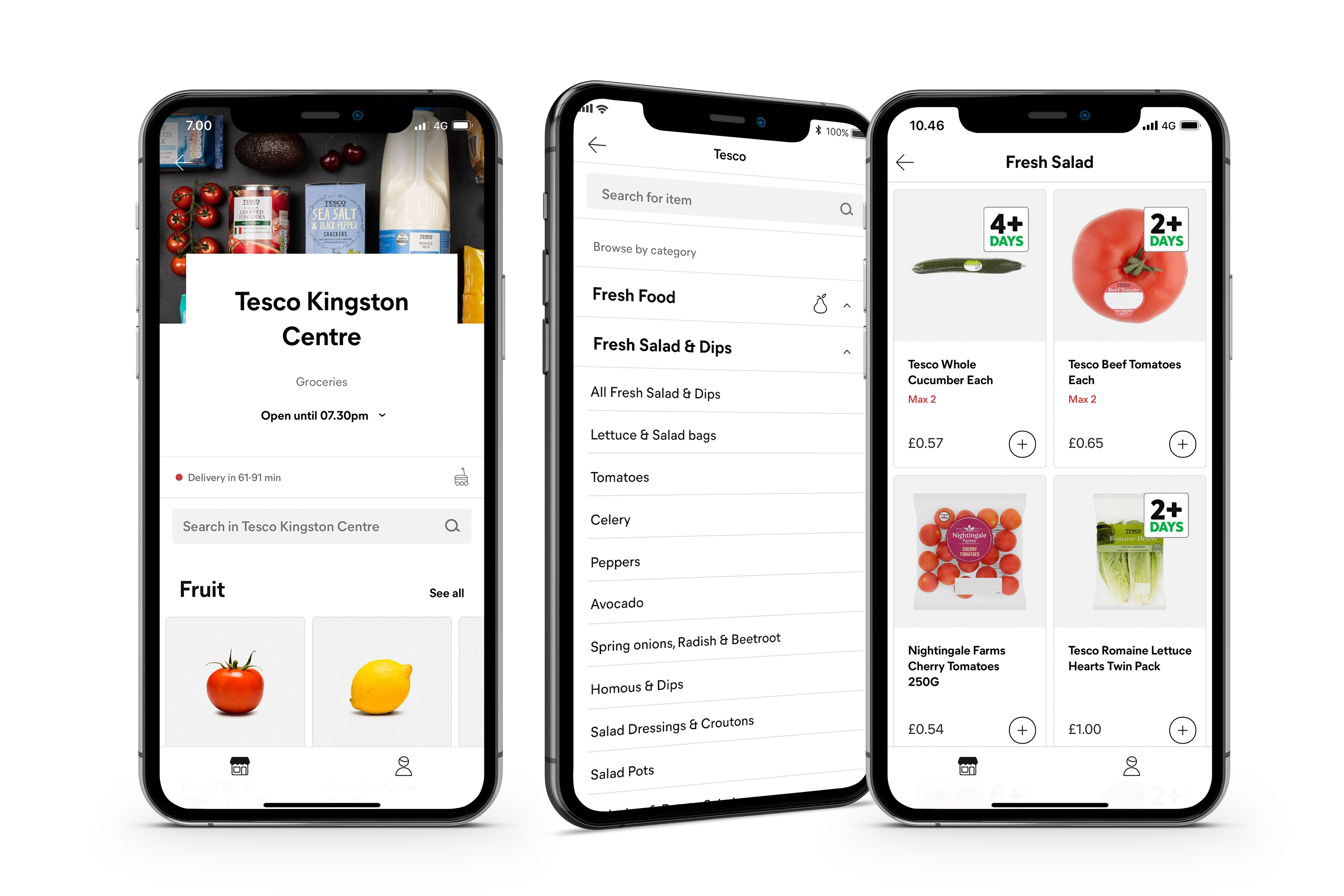
Assortment at supermarket scale forced the product to solve for search and navigation, not just listing items.
Outcomes & recognition
Scaled on both verticals at once
The marketplace scaled on both verticals at once: restaurants grew from 2 sites to more than 10 across the US and UK, and groceries grew from a few hundred essential items toward full supermarket-scale assortment. Starship Marketplace was recognized with a Red Dot Design Award and with Gold in Products at The Best of the Year 2019, the Finnish national designs awards.


Reflection
Trust, built one ordinary errand at a time
Making new technology feel unremarkable is harder than making it impressive. The robots were never the hard part — getting people to trust them enough to use the service for ordinary errands, week after week, was. That meant chasing product-market fit twice, in parallel, on one underlying platform, rather than waiting for a single playbook to emerge and assuming it would apply everywhere. Groceries and restaurants needed different things to work, and treating them as genuinely different products — while sharing the same underlying marketplace — was the actual strategic bet.